Sleep Science & Bedding
Why Wool Comforters Feel Different Across the Seasons
A comforter can feel cozy in January and surprisingly comfortable in a warmer room—not because it cancels out the weather, but because its fill, fabric and construction shape how warmth and moisture move around the body.
Published October 12, 2026
Some bedding has a single, obvious job: add warmth. Wool comforters have a more nuanced reputation. They are often chosen for their ability to retain insulating air while taking up and releasing moisture, qualities that may make them feel comfortable across a range of conditions. Yet no fiber can guarantee a cool night in a hot bedroom or a warm one in a chilly house. The experience depends on the comforter’s fill, its cover, the room’s temperature and humidity, the rest of the bedding, and the person underneath it.
That distinction matters. “Temperature regulating” can sound like a promise that bedding will maintain one ideal temperature all night. In practice, wool does not actively heat or cool a sleeper. It contributes to the small environment between the body, the comforter and the room. The result can be a less clammy or less sharply warm feeling for some sleepers, but comfort remains personal and conditions change.
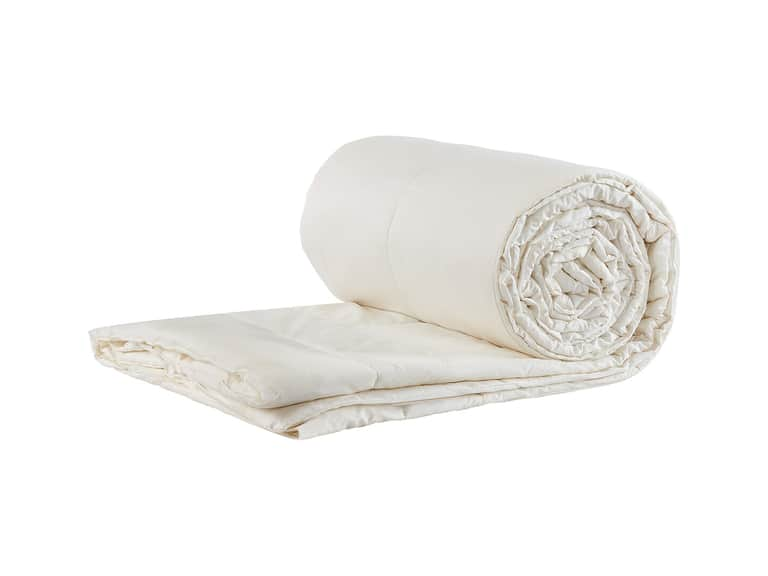
The Sleep and Beyond myComforter offers a useful example of the details worth examining. It is described as having washable wool fill and a cotton sateen cover. Its listed fill weight is 13 ounces per square yard. Those specifics say more about what a sleeper might experience than the word “wool” on its own. They also point to a practical truth: a comforter’s seasonal feel is a product of its whole construction, not just its label.
What wool does—and what it does not
Wool fibers have a structure that can hold air, and trapped air helps slow the movement of heat. That insulating effect is part of why wool is used in bedding and clothing. Wool can also absorb water vapor into the fiber, which may affect how damp or dry a sleep environment feels. Compared with a fabric that leaves perspiration sitting close to the skin, a moisture-managing layer may feel more comfortable to some people.
These characteristics are not the same as active climate control. A wool comforter cannot read body temperature, switch itself into a cooling mode or compensate for a room that is far too warm. Nor does moisture management mean the comforter will feel dry under every circumstance. If a sleeper perspires heavily, the bedroom is humid, or the bedding is too insulating for the conditions, discomfort can still follow.
Think of wool as one part of a sleep system. Sheets, sleepwear, mattress materials, room ventilation and the number of layers all influence the final result. A comforter that feels balanced in a cool, dry room may feel heavier or warmer in a humid one. Someone who runs cold may welcome the same insulation that feels excessive to a hot sleeper.
Wool’s natural variation can also be part of the experience. Fill may settle with use, and the way a comforter is quilted or otherwise secured influences how evenly that fill stays in place. The cover contributes its own feel against the skin and can affect how readily air passes through the finished bedding. These are everyday construction details, not minor footnotes.
Why the seasons change the experience
Winter: insulation meets a colder room
In winter, a wool comforter’s insulating capacity may become especially noticeable. When a bedroom is cool, the layer of air held within the bedding can help reduce heat loss. The cotton cover and other layers also matter: a sheet, duvet cover and mattress all sit within the same microclimate, shaping how quickly warmth builds and whether the surface feels breathable or stuffy.
It is tempting to assume that a heavier comforter is always the right answer for cold weather. But warmth is not determined by fill weight alone. A cold room, lightweight sleepwear, a draft near the bed or a preference for a cooler sleeping temperature may change what feels comfortable. Instead of judging by the calendar, consider how you actually feel after the room has settled into its nighttime conditions.
Summer: moisture and airflow take center stage
In warmer months, the question shifts from “Will this keep me warm?” to “Will this feel too warm here?” Wool’s moisture-handling properties may contribute to a more comfortable sensation for some sleepers, but they do not make a comforter inherently suitable for every summer night. A hot, humid room can challenge any insulating layer, and personal heat production varies.
One simple adjustment is to change the layers before replacing the comforter. A light sheet or thinner duvet cover may be enough on mild nights; on hot nights, a comforter may be unnecessary. If the room is consistently warm, ventilation, a fan or air conditioning—where available and appropriate—can matter more than the fill material. Comfort is the outcome of the whole setup, not a contest between fibers.
Spring and fall: the in-between test
Shoulder seasons make bedding choices feel unpredictable. A chilly evening can give way to a warmer room by dawn; a shift in humidity can change the way fabric sits against the body. A versatile comforter may reduce the need for dramatic changes, but the most useful setup is still one that can be adjusted. Keep an extra blanket within reach, or use a removable cover that is easy to change as the weather moves.
Rather than deciding whether a comforter is “for winter” or “for summer,” watch for patterns over several nights. Do you wake too warm, feel damp, or reach for another layer? A short note about room conditions and bedding can help separate a material issue from a temporary change in weather, illness, stress or sleepwear.
Construction details that shape comfort
Fill weight is a useful starting point when comparing wool comforters. It describes how much fill is used over a given area, not the total weight of the finished product or a universal warmth rating. For the myComforter, the listed fill weight is 13 ounces per square yard. That gives shoppers a concrete specification to compare, but it cannot predict exactly how warm the comforter will feel in every bedroom or on every sleeper.
Next, consider how the fill is held in place. Quilted compartments can help distribute batting across the surface. Construction affects whether the comforter feels even or develops areas that seem thinner or fuller over time. Manufacturer care guidance matters here, too: frequent or rough washing may affect wool batting and its distribution, so machine-washable does not necessarily mean that regular laundering is recommended.
The outer fabric matters just as much. Cotton sateen has a smooth, soft hand and a woven structure that influences drape and touch. A cover that feels substantial or tightly woven may create a different impression from a lighter one. A removable duvet cover adds another layer, which can affect both the feel and the way warmth accumulates. It is practical protection, but it is still part of the bedding system.
These variables explain why two wool comforters may not feel alike. They can differ in fill amount, wool preparation, quilting, fabric, dimensions and care requirements. Even within one product, feel may change with a different duvet cover or sleeping arrangement. When possible, review the product’s construction and care details rather than relying on a broad claim about wool.
A closer look at the Sleep and Beyond myComforter
The Sleep and Beyond myComforter is described as having 100% washable wool fill and a natural cotton sateen cover. Product details list a fill weight of 13 ounces per square yard and recommend using a removable duvet cover to protect the comforter and reduce the need for cleaning. The manufacturer’s care instructions call for gentle handling, infrequent washing and complete drying.
That combination may appeal to sleepers looking for a natural-fiber comforter with a smooth cotton cover and wool fill. But its suitability depends on your preferences, bedroom conditions and willingness to follow the care instructions. No bedding material can guarantee fewer wake-ups, eliminate sweating or treat a sleep disorder. A comforter can support a comfortable sleep environment; it cannot replace medical care or solve every cause of disrupted sleep.
When evaluating the myComforter or any similar bedding, check current product information for the exact fabric and care guidance. Descriptions can vary in how they state specifications, and retailer listings may not use identical wording for thread count or other details. The most useful questions are straightforward: What is the fill? What is the cover? How much fill is used? How is it secured? What cleaning methods are permitted? Is a duvet cover recommended?
How to choose a comforter for your sleep style
Start with your own pattern of warmth. People who regularly wake hot may prefer fewer layers, a lighter cover or a thinner comforter, regardless of fiber. Those who feel cold may appreciate more insulation. If you share a bed, remember that two people can have very different comfort needs. A split-layer arrangement—separate blankets, for example—can sometimes make the setup easier to adjust.
Then consider the room. A naturally cool bedroom, a warm apartment, strong air conditioning and a humid climate are not equivalent environments. A comforter that works well in one may feel less comfortable in another. If you are uncertain, notice how your current bedding performs across a week rather than making a decision based on a single unusually warm or cold night.
Finally, think about maintenance. Wool may suit someone who values its feel and is comfortable airing bedding, using a duvet cover and following specific washing instructions. It may be less suitable for a household that needs frequent, high-heat laundering or prefers bedding that can be washed without special considerations. Practical care is part of long-term comfort.
- For a hot sleeper: Focus on bedroom temperature, airflow and the number of layers. Do not assume wool will feel cool in every climate.
- For a cold sleeper: Compare fill weight and construction, and consider whether the room itself needs better insulation or fewer drafts.
- For a variable climate: Choose layers that can be removed or added easily, and keep a lighter option available.
- For a shared bed: Account for different warmth preferences instead of expecting one comforter to suit both people equally.
- For sensitive skin or allergies: Review the complete material and care information. Natural fibers are not automatically suitable for every individual.
Caring for wool bedding without overdoing it
Care is where a good comforter’s future is decided. A removable duvet cover acts as the first line of defense against body oils, dust and everyday spills. It can usually be washed more routinely than the comforter itself, helping limit the need to clean the wool fill. Check the cover’s own instructions before laundering it; fabrics can have different requirements.
For the myComforter, the listed guidance recommends regular airing and sunning to refresh the bedding, and discourages frequent washing because batting may separate within the quilted pockets. Spot-cleaning the cotton cover with a soft brush and mild detergent is suggested for small marks, followed by thorough air-drying. If a larger stain reaches the comforter, the manufacturer describes a short, low-moisture eco-friendly dry-cleaning option.
When washing is necessary, follow the care label rather than treating “washable” as a license to use any cycle. The product instructions specify cool or warm water on a wool or delicate setting without agitation, an approved wool detergent, no spin, and air-drying or low-heat tumble-drying. They also advise against bleach and ironing. If you are unsure whether your machine can avoid agitation or whether the comforter can dry completely, ask the manufacturer or a qualified cleaner before proceeding.
Drying deserves special attention. A comforter that stays damp can develop an unpleasant smell and may be difficult to restore. Lay it out so air can circulate, and make sure it is fully dry before storing or putting it back on the bed. Avoid compressing wool bedding in a damp place for long periods. Gentle handling and a protective cover are often more useful than aggressive cleaning.
- Use a removable duvet cover and wash it according to its care label.
- Air the comforter periodically in a clean, dry space.
- Spot-clean small marks gently, then let the area dry completely.
- Wash the comforter only when necessary and follow the specific instructions.
- Store it clean and completely dry, with enough space to avoid prolonged compression.
A better measure of “all-season”
All-season does not mean one comforter will feel exactly the same in every month. It means the bedding may remain useful across changing conditions when paired with the right layers and room temperature. Wool’s ability to insulate and interact with moisture helps explain its appeal, but those qualities are only part of the equation. Fill weight, cover fabric, construction, care and personal preference all have a say.
The clearest way to judge a wool comforter is to match its specifications to your own needs, then make small adjustments. Start with the bedroom and the layers already on the bed. Use a duvet cover to protect the comforter. Observe how you feel over time. If discomfort is persistent, severe or associated with symptoms such as breathing difficulties or significant daytime sleepiness, bedding changes may not be enough; consider speaking with a healthcare professional.
For a shopper weighing the Sleep and Beyond myComforter, the useful details are concrete: washable wool fill, a cotton sateen cover, a listed fill weight of 13 ounces per square yard, and care guidance that emphasizes protection and restrained washing. Those facts offer a more grounded picture than a seasonal promise. The rest comes down to the bedroom you sleep in—and the way your body responds to it.